Commercial inputs
- Target customer and use case
- Sales channel and destination country
- Estimated first order and annual volume
- Target cost or retail-price direction
- Required launch and delivery window
Our factory develops private label camping chairs by connecting product position, materials, brand artwork, packing and repeat-order records before bulk production.
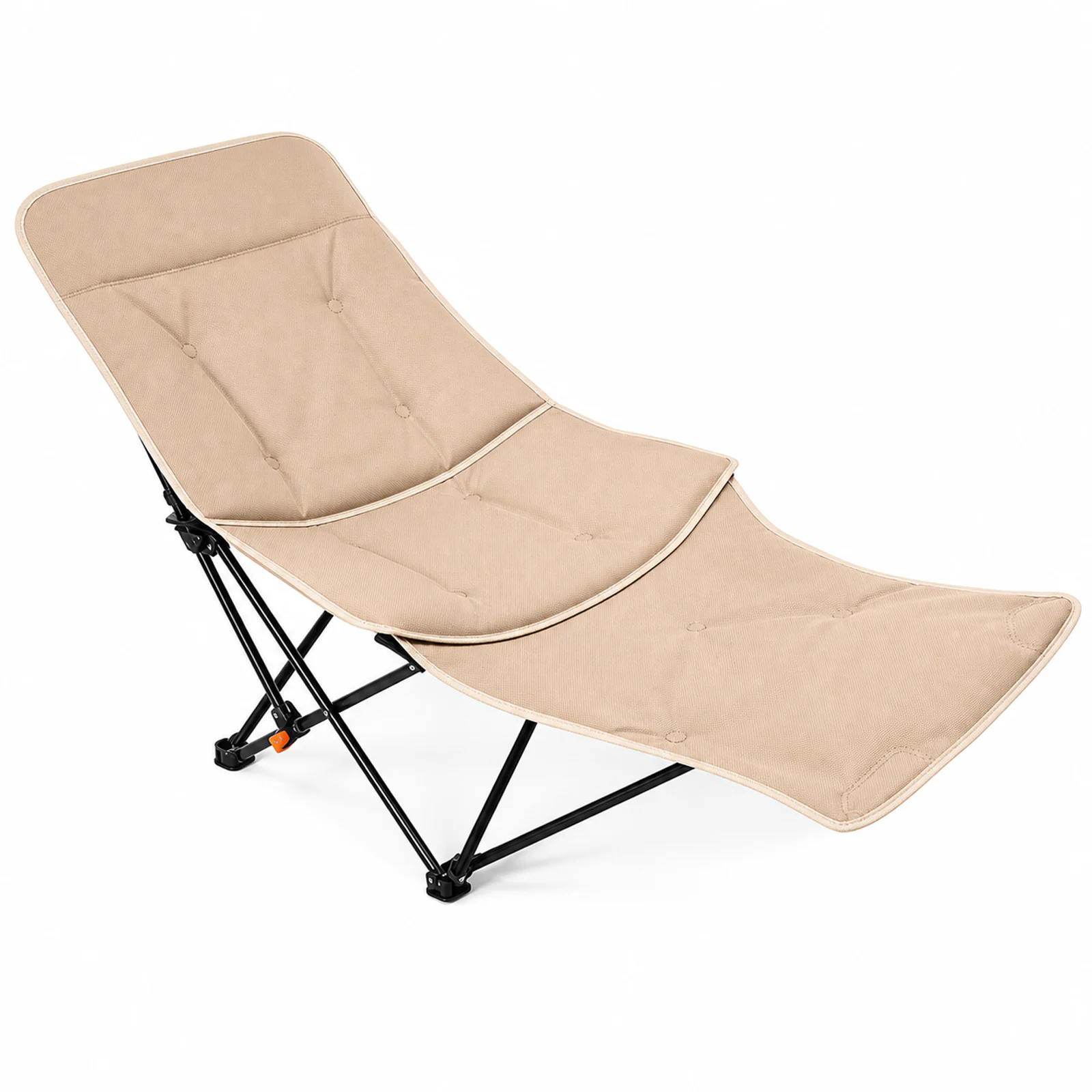
A chair can carry a buyer's name and still fail as a private label product if comfort, price, packed size or sales-channel requirements were never defined.
When a brand contacts our factory, we first ask who will use the chair, where it will be sold and what the first order is meant to prove. A camping brand may need a repeatable color system and repairable parts. A retailer may prioritize carton dimensions, barcode rules and seasonal delivery. An online seller may need verified package data before creating a listing. These choices affect the product before we place artwork on it.
We use the brief to separate essential features from attractive extras. This is especially important when the buyer has a target cost. Removing a critical frame brace to pay for decorative packaging is not a sound trade. We look for changes in platform, fabric, accessory or pack configuration that keep the product suitable for its intended use.
Not every field must be final at the first contact. We do need to know which limits cannot move. If parcel size is fixed, we should not begin with a frame that already exceeds it. If the launch needs four custom colors, we must check fabric minimums before promising a small mixed order.
Using an existing frame is not the same as buying an unexamined stock product. It is a way to reduce tooling risk while still creating a controlled private label specification.
We start from a structure already in regular production, then review dimensions, tube, finish, fabric pattern and load requirement. Color, trim, logo, pocket, bag and packaging can be customized around the platform.
A new sewn panel, padding package, mesh layout or pocket often creates a different product without changing the frame. Pattern, seam placement and tension are approved on a physical sample.
New dimensions, connectors, recline positions or folding geometry require drawings, prototype review and possibly tooling. We identify those items separately so cost and lead time are visible.
When several chairs form one range, we look for shared fabric, coating, logo scale, bag language and carton system. Shared details can improve recognition and reduce unnecessary material splits.
A brand palette on screen is a starting point. Oxford fabric, mesh, powder-coated steel, plastic connectors, wood and embroidery thread reflect light differently. We ask for Pantone references or physical samples, then approve each material within an agreed tolerance. The fabric base and coating also affect the result, so a color approved on one construction does not automatically transfer to another.
Material choices should match the market claim. If the buyer wants a lightweight chair, tube and connector decisions must be reviewed with stability and load. If the chair is intended for fishing or campsite rental, cleaning, drainage and abrasion may matter more than a soft hand feel. We avoid broad words such as “premium fabric” in the specification. We record construction, weight or other measurable requirements that purchasing and QC can verify.
For multi-color launches, we calculate the minimum and leftover risk for every shade. A low chair MOQ does not remove the mill's dyeing minimum. Our Pantone color page explains how we approve fabric, frame coating and logo separately.
We create a list of every branded component so an old file or missing label does not appear late in production.
Logo on the back, seat, arm, pocket or woven label is approved for method, size, Pantone and position. We check seams, panel tension and folding contact before fixing the location.
The bag can carry a print, woven label, barcode, instructions or warning label. We confirm reading direction, closure, strap and whether the information remains visible when packed.
Insert, hang tag, unit box, master carton and shipping mark each need a final file and proof. We record model, quantity, gross weight, destination marks and barcode position.
Printing the same logo everywhere does not mean using one unchanged file. The chair and bag have different printable areas; a small woven label needs simplified detail; a carton mark needs warehouse-readable data. We maintain a component list with the correct revision for each use. For logo methods and production limits, see our custom logo guide.
The buyer should review more than appearance. We confirm open and folded dimensions, sitting position, frame finish, fabric and seam construction, accessories, logo, labels, bag and pack method. Any approved deviation is added to the written specification. A photo can document a detail, but it does not replace measurements, material descriptions and final artwork files.
For a new brand, we often recommend approving the chair first, then the full packing set. This makes it easier to identify whether a change belongs to the product or the presentation. When both are final, we use the signed sample and specification for bulk production. Our sample-development checklist shows the points buyers should sign off before the purchase order.
Our usual MOQ for a regular structure is 300–500 pieces, but each custom component can have its own minimum.
Custom-dyed fabric, patches, printed boxes and molded parts may require more than the chair assembly line. We show which input creates the limit. For a market test, an existing frame, available fabric construction, one or two colors and an export carton are usually easier to control than a new frame, several dye lots and complex retail packaging launched together.
We also consider what happens if the first order sells. A one-time fabric purchased from a spot market may achieve a small opening quantity but make repeat color matching difficult. When continuity matters, we prefer a material and finish that can be specified and sourced again. Buyers can review our trial-order guidance before deciding which brand elements are essential for launch.
During production, we check incoming fabric and components against the order, then review critical sewing, frame finish and assembly points. Final QC includes appearance, operation, sampled load requirements, logo position, labels, bag fit, quantity and carton marks. The exact sampling level and buyer checklist should be agreed before production.
Brand errors are often data errors: a previous barcode, an old logo revision or the correct artwork on the wrong color. We reduce that risk by naming revisions and linking each file to a component. At packing, we confirm that the chair model, bag, insert, barcode and carton belong to the same order. Buyers can request agreed inspection photos or coordinate third-party inspection through our QC process.
For export, final carton size comes from the approved packed product. Board strength, pieces per carton, gross weight, labels and shipping marks are then fixed. Retail packaging still needs an outer carton capable of protecting it in transit. Our packing page lists the data to approve before shipment.
Before a repeat run, we confirm the last approved sample, material specification, color references, artwork versions and packing record. We ask whether the buyer is changing channel, barcode, quantity split or destination. If a fabric or component is no longer available, we present the replacement for approval instead of substituting it silently.
This record also helps a brand extend the range. A new moon chair or table can reuse the same palette and packaging language without assuming that its construction is identical. Shared brand rules stay consistent, while each product keeps its own structure, test and carton specification.
Send the target customer, sales channel, quantity, price direction, launch date, chair reference, required performance, color palette, logo files, labels, barcode, packaging and destination. Mark any fixed limits such as parcel size or retailer template. We will return the missing questions, recommended sample sequence and the component minimums that affect the first order.
Yes, and this is often the lowest-risk route. We can use an active frame and customize fabric, color, logo, labels, carry bag and carton. The buyer still approves a complete sample and written specification so the first order is not treated as a generic catalog purchase.
Send vector logo files, Pantone references, barcode data, label copy, care or warning text, country-of-origin requirements, carton marks and any retailer template. Each item also needs dimensions, material, position and an approved proof. The buyer remains responsible for confirming market-specific legal wording.
We work from the last approved sample, material specification, color references, artwork revision, label files and packing record. Before repeating, we confirm any discontinued material or requested change. New artwork or color is treated as a controlled revision rather than mixed into the old order informally.
Include target buyer, quantity, price direction, chair reference, colors, logo, labels, packaging, destination and launch date. We will map the approvals needed for the first order.