Chair and order information
- Chair photo, drawing or catalog reference
- Estimated order quantity and quantity by color
- Destination market and sales channel
- Fabric, frame finish and load requirement
- Carry-bag and export-carton request
Yes. We customize camping chairs with buyer artwork, but we approve the logo together with the chair material, position, sample and packing—not as a separate decoration.
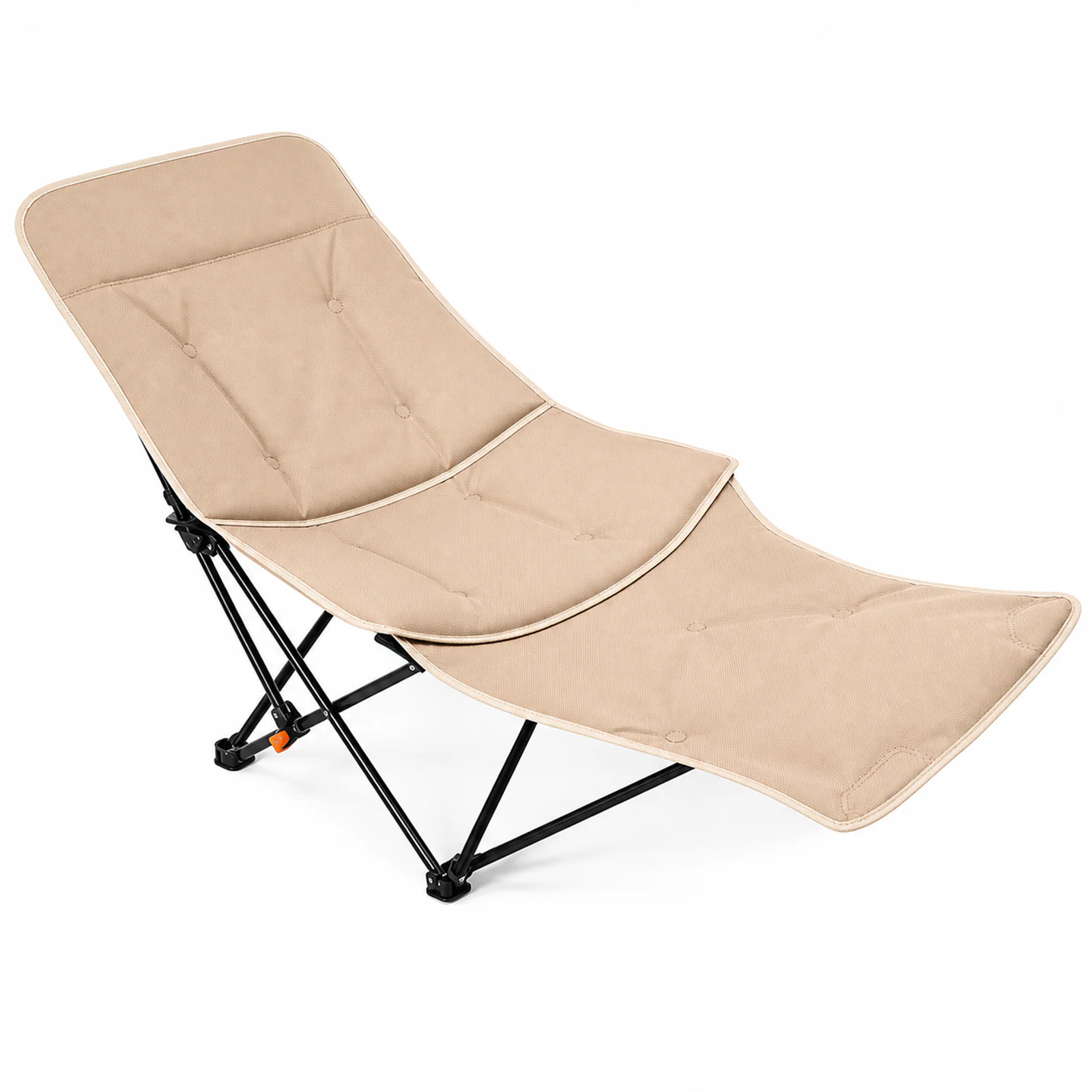
When a buyer asks whether we can add a logo, our first answer is yes. Our next questions are about the chair. A clean vector file does not tell us whether the mark will sit on coated Oxford fabric, open mesh, a padded back panel, a wooden armrest or a carry bag. Those surfaces move, stretch and accept ink or thread differently.
In our factory, logo work begins with the approved chair structure and fabric construction. We check where the panel carries body load, where seams run, how the chair folds and which areas rub against the frame or bag. This prevents a common sourcing problem: a logo proof looks correct on a computer, but the finished mark is partly hidden, distorted by seat tension or placed on a fold line. The artwork is important, but the product tells us how that artwork can be produced reliably.
A complete first message saves several rounds of guessing. We can review a project faster when the commercial requirement and the production files arrive together.
A JPG is enough for an early feasibility discussion, but it is not always enough for production. Fine outlines, small text and gradients may need adjustment for printing or embroidery. We flag those limits before making the sample instead of silently simplifying the logo on the production floor.
Screen printing is practical for clear shapes and limited colors. Transfer methods can handle more detail, but heat, coating and color migration must be checked on the actual fabric. We make a strike-off or product sample before approving tone and edge definition.
Embroidery adds texture and can suit a brand-led back panel. It also adds thread density and a backing layer. On padded or tensioned panels, we check puckering, stiffness and needle damage so the mark does not change the way the panel sits.
A woven label is useful when a compact logo needs consistent detail across chair, bag or accessory. The label edge, fold, sewing allowance and location must be fixed. We avoid putting it where the user will feel a hard edge or where folding hardware can catch it.
Rubber, leather-look or fabric patches can create a distinct finish, but they introduce their own color, thickness and minimums. We check attachment method, corner lift, abrasion and whether the patch changes packed thickness.
Buyers often mark a position on a front-view photo. We also review the chair from the back, in use and fully folded.
The center of a backrest is visually strong, but it may contain a vertical seam, mesh insert or padded channel. A seat-front logo can be visible in retail display, yet that area may stretch under load. Armrest printing has limited width and may rub against a cup holder. A carry-bag logo needs the correct reading direction when the bag is carried or placed in a carton.
We confirm finished dimensions from fixed reference points—such as a seam, panel edge or frame centerline—rather than relying on a vague instruction such as “logo in the middle.” The approved sample shows position, but the written measurement helps sewing and QC repeat it across the order. If the artwork is used on several chair sizes, we decide whether the mark keeps one physical size or scales with each panel.
We review the original artwork, fabric surface, color count, finished size and required method. If a line is too fine or a color cannot be held on the selected coating, we explain the limitation before charging for a sample.
We prepare a fabric strike-off, sewn panel or complete chair sample depending on risk. A full chair is preferable when panel tension, padding, folds or nearby hardware can change the appearance.
After approval, we keep the artwork version, Pantone, size, position, method and sample reference with the order. A later email file does not replace the approved version unless the change is recorded.
We ask buyers to review the proof in normal viewing distance as well as close up. A technically accurate mark can still be too small for a retail display or too dominant for the product. This is the right stage to adjust it; changing after bulk panels are printed creates waste and delays.
Logo application alone does not determine MOQ. The larger minimum often comes from custom-dyed fabric, a special patch, printed packaging or a color split that is too small for production.
For a trial order, we first check whether the buyer can use an existing frame, a stocked fabric construction and a regular bag or carton. A one- or two-color print on an available panel is usually easier to start than a new Pantone fabric, molded badge and four-color retail box at the same time. We do not quote a low chair MOQ and ignore the unused material from a larger fabric or packaging minimum. The quotation should show which component creates the constraint.
See our low-MOQ order guidance when the first run is intended to test a market. For a color-controlled program, review the Pantone approval process before dividing the order among several shades.
During production, we compare the logo with the approved sample and written record. The inspection points depend on the method.
We also check the logo after the chair is assembled and folded. Hardware can cover a mark that looked fine on a loose panel, and a printed surface can contact another tube inside the carry bag. The final packing check confirms that chair, bag, label and carton use the same brand version. Buyers can provide their own checklist or request agreed production and packing photos through our quality-control page.
Color and placement drift usually appears when a repeat order starts from an old email attachment instead of the last approved record. We identify the artwork revision, retain the approved physical reference when practical and record size and position in the specification. If the buyer updates a brand mark, we treat it as a controlled change and confirm which chair, bag, label and carton files must be replaced.
Export packing is part of the same system. A correctly branded chair can still be rejected by a warehouse if the barcode, model number or shipping mark is wrong. Our export-packing checklist covers bag, unit protection, carton data and proof approval.
Send the chair reference, estimated quantity, colors, destination, artwork, preferred logo method, finished size, marked position and every item that needs branding. If the method is open, tell us the appearance and target cost rather than choosing from a name alone. We will reply with the missing production points, sample route and any component minimum that affects the order.
The answer depends on coating, artwork size, color count and the required hand feel. We normally compare screen or transfer printing for flat artwork, embroidery for a stitched finish, and woven labels or patches when the mark needs a separate branded component. We test the selected method on the actual 600D Oxford construction before bulk approval.
Yes, but the two applications may need different sizes or methods. The chair panel can be padded, tensioned or crossed by seams, while the carry bag is usually a lighter fabric with a smaller printable area. We prepare and approve each placement separately so both marks remain readable and correctly oriented.
We need written approval of the final artwork version, Pantone references, finished size, position, application method, sample appearance and any logo on the bag, woven label, insert or carton. That approval becomes part of the order specification used by printing, sewing, assembly and final QC.
Include quantity, fabric, logo size and position, bag branding, packing request and destination. Our production team will identify the approvals needed before bulk production.