Geometry to put on the sample sheet
- Seat height, width and usable depth
- Usable back-support height from the seat
- Back angle and recline positions, if any
- Headrest location and lumbar shape
- Armrest height and clearance
We manufacture high back camping chairs for OEM orders by balancing back support, frame leverage, fabric tension, packed size and the buyer's load requirement.
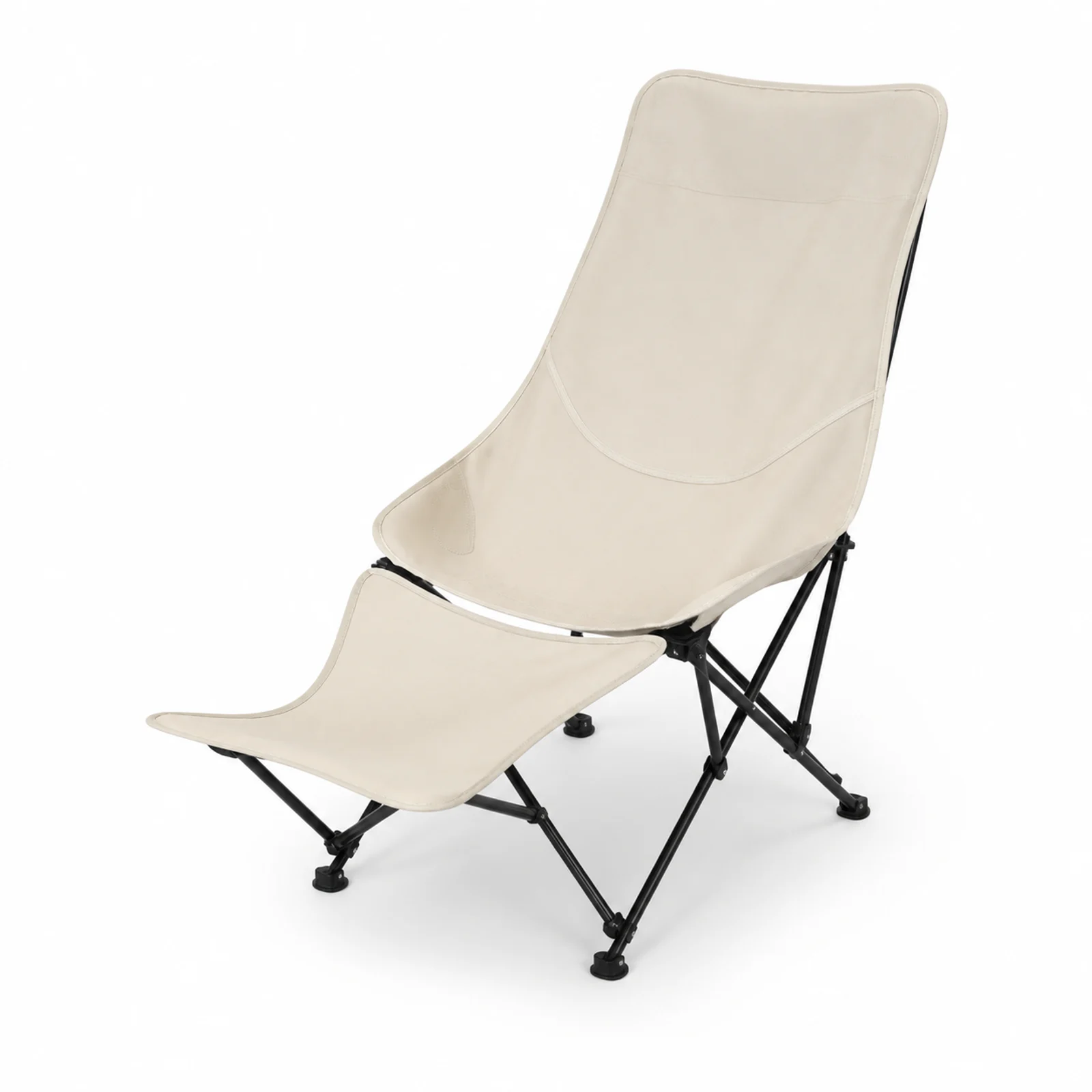
A high back camping chair is not a standard chair with extra fabric sewn on top. The longer back creates more leverage on rear tubes, joints and the seat-to-back connection.
In our factory, we review the user position before selecting tube size or fabric weight. When a buyer leans back, the load moves through the panel into the rear frame and cross braces. If the back angle is too open, the chair can feel unstable even when the frame is strong. If the panel is too tight, it pushes the user forward; if it is too loose, the headrest and lumbar area stop working as intended. Our sample process therefore treats geometry, structure and soft goods as one system.
“High back” can describe several products: an upright dining-style camping chair, a relaxed lounge chair, a padded moon chair or a reclining model with a leg rest. Buyers should tell us how the chair will be used and which body area needs support. A festival chair carried long distances has a different target from a car-camping chair used for several hours.
We measure these points from agreed references, because overall dimensions can hide the actual support area. Two chairs with the same overall height may have different seat depth, frame angle and head position. A physical sample is the fastest way for a buyer to find that difference before a bulk order.
The rear frame carries extra leverage, but adding heavy tube everywhere is not an efficient answer. We reinforce the load path that the selected structure actually uses.
Steel is common when cost and stiffness are priorities. Aluminum can reduce carry weight, but alloy, section, wall thickness, connector design and surface finish must be considered together. We do not substitute material by name while keeping unverified joints.
Longer tubes need controlled alignment and support. We check where braces meet, how loads enter rivets or bolts and whether the feet stay flat when the user leans back. Extra length can expose twist that is less noticeable on a low chair.
A folding stop, hinge or recline lock must open smoothly without excessive play. We inspect clearances, pinch areas and symmetry. If the chair has several positions, every position is included in the functional check.
A taller back can make a narrow base feel less secure. Foot shape, leg spread and ground conditions matter. We ask whether the chair will stand on hard campsite pads, sand, grass or soft fishing ground before confirming the base.
A longer fabric panel has more opportunity to stretch, twist and show sewing variation. We specify the construction instead of relying only on a “600D” label.
For Oxford fabric, we review base yarn, density, coating, hand feel and color. Mesh can improve ventilation, but the mesh-to-Oxford seam becomes a load transition that needs reinforcement and even tension. A padded back may use foam, fiber or quilted channels; each changes folded volume and drying behavior. The edge binding, webbing and thread must suit the panel rather than being copied from a shorter chair.
The headrest can be a removable pillow, an adjustable strap pad or a shaped section of the back panel. We check its position with the chair under normal seat load, because the user's body moves the fabric. A pillow that looks centered on an empty sample may sit too high after the panel settles. We also check whether buckles, hook-and-loop tape or zippers touch the user or press into the frame inside the carry bag.
Logo placement follows the same logic. The most visible upper panel may also be curved, padded or crossed by a headrest strap. We approve artwork on the finished sample and record its position from stable seams. See our logo application guidance when the chair, pillow and bag all need branding.
We measure seat and back references, compare left and right alignment and place the chair on a flat surface. The frame should open fully without one foot lifting or the back twisting.
We review panel tension, seam position, padding, headrest height, armrest clearance and any recline or leg-rest function. Buyer feedback is recorded as a specification change, not left as a verbal note.
We close the chair, fit the final carry bag and measure length, width, depth and weight. Accessories must have a defined storage position and should not create pressure points inside the bag.
One approved sample should represent the product that production and final inspection will follow. If back angle, fabric construction or frame material changes after approval, we review whether a new sample or test is needed before the purchase order is released.
A capacity claim is only useful when the buyer and factory agree on load position, duration, sample quantity and acceptance criteria. A high back chair may experience both vertical seat load and rearward force. The suitable test depends on the structure and the market standard requested by the buyer.
Before bulk production, we identify the frame, fabric and critical joints used by the approved sample. During production and final QC, we check alignment, coating, fasteners, critical seams, opening function and selected load-test samples. For a new structure or a formal market requirement, third-party testing can be discussed. Our quality-control overview explains how buyer-specific checklists become part of the order record.
Long rear tubes, a pillow and thicker padding can change freight more than a small change in unit price.
We do not finalize carton dimensions from an early drawing. We measure the approved chair inside its finished bag, then decide pieces per carton, orientation, protection and gross weight. A carton that is too long can be awkward for parcel channels or warehouse racks. A carton with too many heavy chairs can exceed handling limits even when the pieces physically fit.
Buyers should share any parcel-size limit, pallet pattern, container plan or retailer carton rule during sampling. We can compare a continuous rear tube, segmented construction or different padding package when transport efficiency is important, but each change must still meet the support requirement. Carton label, barcode and shipping mark are approved after the size is confirmed. Refer to our export-packing page for the data needed on the order sheet.
Our usual MOQ for regular structures is 300–500 pieces, subject to model, fabric, color, logo and packing. An existing high back frame with available material is the practical starting point for a trial order. A custom molded joint, new recline mechanism, exclusive fabric color or printed retail box may create a higher component minimum.
Common OEM changes include fabric color, mesh layout, padding, removable headrest, pocket, cup holder, armrest cover, logo, carry bag and carton. We separate these soft-goods changes from structural work so the buyer can see which decisions affect tooling, sample time and risk.
Send a reference photo or drawing, open dimensions, usable back height, target user, load requirement, quantity, frame preference, fabric and padding, headrest type, accessories, maximum folded size, logo, packing and destination. If some values are not decided, mark the priorities. We can then suggest an existing platform or explain which structural points need development before quoting.
Specify the usable support height from the seat reference, not only the overall chair height. We also need seat depth, back angle, target user and whether the head should rest on a separate pillow or on the main panel. We confirm those relationships on a physical sample because the same overall height can feel very different with another seat angle.
Yes. A removable pillow, adjustable strap or shaped padded panel can be developed, but the attachment must hold its position, avoid hard pressure points and remain easy to pack. We approve filling, strap length, hook-and-loop position and storage method on the sample before bulk production.
Longer rear tubes and a taller fabric panel increase folded length, while a pillow or thicker padding adds volume. That can reduce pieces per carton or raise gross weight. We confirm the final carton only after measuring the approved chair inside its finished carry bag.
Include quantity, frame material, load requirement, headrest, fabric, logo, carry bag and destination. We will review the sample and carton risks before quoting.